

Table of Contents
- Why Hormone Balance Shifts in Perimenopause
- Natural Remedies for Perimenopause: What the Evidence Shows
- 1. Build a Perimenopause Diet Around Blood-Sugar Stability
- 2. Use Exercise for Perimenopause to Protect Muscle and Metabolism
- 3. Prioritize Sleep Quality and Consistency
- 4. Manage Stress and Support Cortisol Balance
- 5. Choose Perimenopause Supplements With Safety in Mind
- 6. Support Gut Health and Reduce Inflammation
- 7. Track Symptoms and Know When to Seek Medical Care
- Frequently Asked Questions
Last Updated: October 17, 2026
Why Hormone Balance Shifts in Perimenopause
Perimenopause is the transition years before menopause, when estrogen and progesterone swing up and down instead of following a steady pattern. Those swings explain the hot flashes, disrupted sleep, mood changes, and stubborn weight gain many women notice in their 40s and early 50s. At GAYA Wellness, we see this stage mislabeled as “just aging” far too often. It is a distinct hormonal phase, and it responds to targeted support. Below, we break down seven natural ways to balance hormones in perimenopause, ranked by what the evidence actually supports, plus the safety details most guides skip.
Perimenopause is not a single event. It is a years-long transition with unpredictable hormone fluctuations, which is why one-size advice rarely works.
Natural Remedies for Perimenopause: What the Evidence Shows
Natural remedies for perimenopause range from diet and exercise to sleep, stress control, and select supplements. The evidence is strongest for lifestyle basics and weakest for miracle supplements. A 2025 review indexed in PubMed Central’s review of natural strategies for estrogen optimization reports that flaxseed lignans reduced perimenopausal symptoms, and that combined vitamin E and omega-3 lowered hot-flush intensity. That review does not provide effect sizes, so treat these as supportive tools, not cures.
Here is how we prioritize the seven approaches:
| Approach | Effort | Evidence Strength | Best For |
|---|---|---|---|
| Blood-sugar-friendly diet | Medium | Strong | Weight, energy, mood |
| Strength and cardio exercise | Medium | Strong | Muscle, metabolism, sleep |
| Sleep consistency | Low | Moderate | Hot flashes, mood |
| Stress and cortisol support | Low | Moderate | Sleep, mood, cravings |
| Targeted supplements | Low | Mixed | Specific symptoms |
| Gut health and anti-inflammatory eating | Medium | Growing | Bloating, inflammation |
| Symptom tracking and medical review | Low | Strong | Personalizing the plan |
1. Build a Perimenopause Diet Around Blood-Sugar Stability
A perimenopause diet should center on protein, fiber, and healthy fats at every meal. This steadies blood sugar and insulin, which matters more as estrogen declines. Estrogen helps with insulin sensitivity, so when it fluctuates, so does your response to carbohydrates.
What we recommend in practice:
- Anchor each meal with 25-30 grams of protein
- Add fiber from legumes, vegetables, and flaxseeds
- Choose healthy fats like olive oil, nuts, and omega-3 fatty acids
- Cut added sugar and refined carbohydrates
- Include phytoestrogens such as flaxseeds and legumes
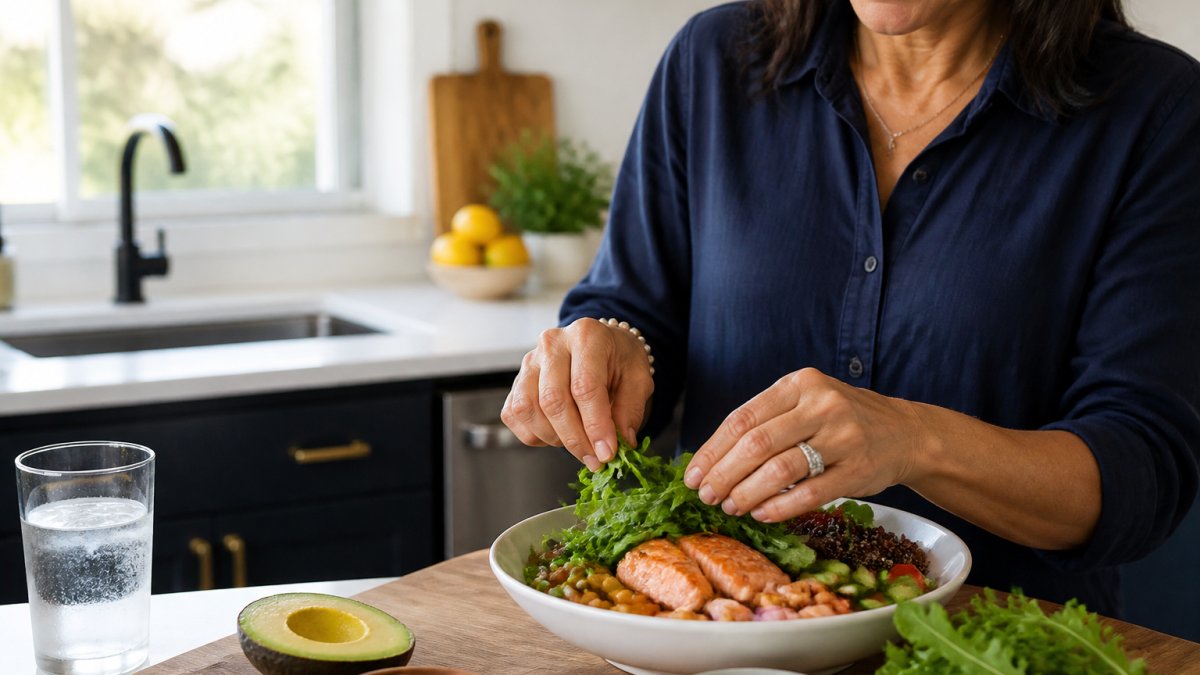
A common mistake is skipping breakfast or eating carb-heavy meals alone. Both spike and crash blood sugar, which worsens mood changes and cravings.
2. Use Exercise for Perimenopause to Protect Muscle and Metabolism
Exercise for perimenopause should combine strength training and cardio, not cardio alone. Muscle mass drops faster in midlife, and strength work protects both muscle and metabolic health. Cardio supports heart health and mood, while high-intensity interval training can be efficient for busy schedules.
Try this weekly baseline:
- Two to three strength sessions
- Two cardio sessions, walking counts
- One or two shorter HIIT or interval days
- Daily movement breaks and stretching
If you are new to lifting, start with bodyweight and light weights. Consistency beats intensity.
3. Prioritize Sleep Quality and Consistency
Sleep quality often slips in perimenopause because night sweats and hormone fluctuations interrupt rest. A fixed sleep and wake time, a cool dark room, and less alcohol in the evening all help. Sleep duration matters too; short sleep raises cortisol and worsens mood changes and cravings.
Keep your bedroom cool and layer bedding you can remove. Many women find night sweats easier to manage with breathable layers than with a single heavy duvet.
4. Manage Stress and Support Cortisol Balance
Chronic stress raises cortisol, and cortisol interacts with estrogen and progesterone. That link helps explain why stressful weeks often bring worse hot flashes and mood swings. Stress management is not soft advice; it is hormone support.
Simple tools that work:
- Ten minutes of slow breathing or yoga daily
- A short walk outdoors
- Boundaries around work email after hours
- Regular physical activity you actually enjoy
5. Choose Perimenopause Supplements With Safety in Mind
Perimenopause supplements can help specific symptoms, but the evidence is uneven and safety comes first. Below is how we sort the most common options, with the practical details most guides leave out. (Source: the U.S. Department of Health and Human Services’ Physical Activity Guidelines for Americans)
What has the most support
- Vitamin E plus omega-3 fatty acids. A 2025 review indexed in PubMed Central’s review of natural strategies for estrogen optimization reported reduced hot-flush intensity with combined vitamin E and omega-3, though the review did not report effect sizes. Food-first sources of omega-3 include salmon, sardines, and walnuts.
- Flaxseed lignans. The same review noted symptom reduction with flaxseed lignans. Ground flaxseed is the practical form; whole seeds pass through undigested.
- Calcium and vitamin D. These do not balance hormones, but they support bone density, which declines faster as estrogen falls. Most practitioners recommend getting calcium from food first and using supplements to close the gap.
- Magnesium. Commonly used for sleep and muscle tension. Magnesium glycinate is gentler on the stomach than magnesium oxide.
What has mixed or limited evidence
- Black cohosh. Some trials show benefit for hot flashes; others show none. Product quality varies widely, and rare liver-injury reports exist, so clinician review matters.
- Red clover and soy isoflavone supplements. Phytoestrogens may help some women, but response varies and these are not appropriate for everyone, particularly women with hormone-sensitive conditions.
- DHEA and progesterone creams. Sold widely online with claims that outrun the evidence. These are hormones, not benign botanicals, and should not be self-prescribed.
Safety and interaction checklist
Supplements are not risk-free. Before starting anything, review this list with your clinician or pharmacist:
– Thyroid medication (levothyroxine): calcium, iron, and magnesium can block absorption if taken at the same time. Separate doses by at least four hours.
– Blood thinners (warfarin, apixaban, rivaroxaban): fish oil, vitamin E, and some botanicals can increase bleeding risk.
– Hormone therapy: adding phytoestrogen supplements on top of prescribed estrogen is not a neutral choice; discuss it first.
– Antidepressants and blood-pressure drugs: St. John’s wort and some botanicals interact with common medications.
– Liver conditions: black cohosh and combination herbal blends warrant extra caution.
Product quality matters more than the label claim
Supplements are not reviewed by the FDA for safety and effectiveness before they are sold. Look for a third-party verification mark (USP, NSF, or ConsumerLab), a clear amount per serving, and a manufacturing date. Avoid proprietary blends that hide doses. If a product promises to “balance hormones,” treat that as marketing, not a mechanism.
Supplements can support specific symptoms, but they do not reliably normalize hormone levels and they are not a substitute for indicated treatment. Start one at a time, give it four to six weeks, and track whether it actually changes anything.
6. Support Gut Health and Reduce Inflammation
Gut symptoms and inflammation both shift during perimenopause, and the reasons are more specific than “eat more fiber.” Estrogen influences the gut microbiome and the intestinal barrier, so as estrogen fluctuates, some women notice more bloating, changed bowel habits, and food sensitivities they did not have in their 30s. Low-grade inflammation also rises with age and with visceral fat gain, which is why the same diet changes that support blood sugar also support how you feel day to day.
What to do, in order of impact
- Hit a fiber target, not just a fiber intention. Aim for roughly 25-30 grams per day from food. Practical anchors: half a cup of cooked lentils (about 8 grams), one cup of raspberries (about 8 grams), one medium avocado (about 10 grams), and a tablespoon of ground flaxseed (about 2 grams). Increase gradually and add water to avoid bloating.
- Add fermented foods most days. Yogurt with live cultures, kefir, sauerkraut, kimchi, and tempeh are the most studied options. A small serving daily is more useful than a large serving once a week.
- Eat a range of plant fibers, not the same three vegetables. Different fibers feed different gut bacteria. Rotate legumes, whole grains, nuts, seeds, and colorful vegetables across the week.
- Cut ultra-processed foods and added sugar where you can. These are the biggest dietary drivers of low-grade inflammation for most people, and they also destabilize blood sugar.
- Stay hydrated and move daily. Both support regular bowel function, which matters more when hormone fluctuations slow transit.
A realistic two-week starter protocol
- Week 1: Add one fermented food serving per day and one legume-based meal. Keep everything else the same so you can tell what changed.
- Week 2: Raise fiber toward the 25-30 gram target and swap one ultra-processed snack per day for nuts, yogurt, or fruit.
- Track: Note bloating, bowel habits, and energy in the same symptom log you use for hot flashes and sleep. If symptoms worsen, back off the fiber increase before abandoning the plan.
If bloating gets worse when you increase fiber, split the increase across two weeks and prioritize cooked vegetables and legumes over raw cruciferous vegetables until your gut adjusts.
When gut symptoms need medical review
Persistent changes in bowel habits, blood in the stool, unexplained weight loss, or symptoms that wake you at night are not perimenopause symptoms to manage with diet. They warrant evaluation by a clinician. The same is true for food reactions that appear suddenly and severely.
Gut and inflammation support is a medium-effort, growing-evidence area. It helps many women feel better, but it is supportive care, not a hormone treatment, and persistent digestive changes deserve a medical workup.
7. Track Symptoms and Know When to Seek Medical Care
Symptom tracking turns guesswork into a plan you can adjust. Log hot flashes, sleep, mood, and cycles for four weeks. Bring that log to a clinician if symptoms disrupt work, sleep, or relationships.
Lifestyle support is powerful, but it is not a substitute for medical care. Persistent or severe symptoms, or symptoms that affect daily life, warrant evaluation by a qualified professional.
At GAYA Wellness, we build personalized, lab-based plans for women 40 and older. Our concierge care, led by board-certified OB/GYN Dr. Shweta Patel, uses symptom patterns and labs to shape a clear plan, whether that means lifestyle support, medical weight loss, or hormone optimization. We help you stop guessing and follow a plan built for your body.
Frequently Asked Questions
How can you naturally support hormone balance during perimenopause?
Start with the foundations: a nutrient-dense diet built around protein, healthy fats, and fiber; regular strength training and cardio; consistent sleep; and stress management. A 2025 review indexed in PubMed Central reported that flaxseed lignans reduced perimenopausal symptoms, and that combined vitamin E and omega-3 lowered hot-flush intensity, though effect sizes were not detailed. Supplements can help but should be chosen with a clinician who can check interactions and contraindications. Tracking symptoms gives you measurable feedback on what works for your body.
Which vitamins are worth discussing with a clinician during perimenopause?
The 2025 PubMed Central review noted that combined vitamin E and omega-3 lowered hot-flush intensity, and that flaxseed lignans reduced perimenopausal symptoms. Magnesium and calcium are often discussed for bone and sleep support. Because supplements can interact with medications and are not risk-free, review any perimenopause supplements with a qualified clinician before starting, especially if you have a history of hormone-sensitive conditions.
Can diet and exercise help manage perimenopause symptoms?
Diet and exercise are the foundation of natural symptom management. A perimenopause diet focused on protein, healthy fats, fiber, and reduced refined carbohydrates supports blood-sugar stability and metabolic health. Exercise for perimenopause, particularly strength training plus cardio, helps protect muscle mass and healthy weight as estrogen fluctuates. These lifestyle changes do not replace medical treatment when symptoms are severe, but they give your body the best baseline. Track your symptoms for four to six weeks to see measurable change.
When should you talk to a clinician about perimenopause symptoms?
Seek medical evaluation if symptoms disrupt sleep, work, or relationships; if hot flashes or mood changes feel unmanageable; if you have irregular bleeding, especially after a year without periods; or if weight gain and metabolic changes persist despite lifestyle effort. A clinician can order labs, rule out other conditions, and discuss whether hormone therapy or other treatment is appropriate. Natural remedies and perimenopause supplements are supportive tools, not a substitute for diagnosis when symptoms warrant it.
Hormone changes in perimenopause are real, and they deserve more than a shrug. Start with the basics: steady blood sugar, strength training, sleep, and stress support. Then track what works and get expert help when symptoms interfere with your life. Book a consult with GAYA Wellness to get a personalized, lab-based plan built around your symptoms and goals.