
Table of Contents
- Why Lab-Based Hormone Testing Matters for Women’s Health
- Accuracy of Serum Hormone Testing vs. Other Methods
- Key Benefits of Laboratory-Based Hormone Testing
- Preparing for a Hormone Blood Draw: Timing and Best Practices
- Best Time of Day for Hormone Blood Work
- Understanding Your Results: Normal vs. Optimal Ranges
- From Test Results to Action: Building Your Hormone Optimization Plan
- Conclusion
Last Updated: August 14, 2026
Why Lab-Based Hormone Testing Matters for Women’s Health
Lab-based hormone testing provides the most reliable way to measure circulating hormone levels in your blood, giving you objective data to guide treatment decisions. Unlike saliva, urine, or at-home finger-prick tests, serum hormone analysis captures a complete biochemical picture at a specific point in time, which is especially critical for women navigating perimenopause and menopause.
Many women have spent years feeling dismissed by healthcare providers who attribute their symptoms to "normal aging" without ordering comprehensive labs. At GAYA Wellness, we believe that guessing about your hormones is no longer acceptable. When you have objective data in hand, you can make informed decisions about whether hormone optimization is right for you and what approach will work best for your unique hormonal archetype.
By measuring estrogen, progesterone, testosterone, DHEA, cortisol, and thyroid markers simultaneously, you get a comprehensive view of your endocrine system’s actual state. This is the foundation of precision medicine for midlife women.
The timing of your blood draw matters enormously for hormone accuracy. Many women redo their tests because the first draw happened at the wrong point in their cycle, invalidating the results. Understanding this upfront saves time, money, and frustration.
Accuracy of Serum Hormone Testing vs. Other Methods
Serum hormone testing (blood drawn from a vein) remains the gold standard for diagnostic accuracy in clinical medicine. When your blood is analyzed in a certified pathology lab, the precision of the measurement is unmatched by other testing methods currently available to consumers.
Serum testing measures the concentration of hormones actually circulating in your bloodstream at the moment of collection. Saliva tests measure free hormones only, missing the bound hormones that make up the majority of your total hormone load. At-home finger-prick tests use capillary blood rather than venous blood, producing less stable samples and higher variability. Urine tests measure metabolites (breakdown products) of hormones, not the hormones themselves, introducing another layer of interpretation.
The clinical assay process in a certified lab involves standardized protocols: your blood is centrifuged to separate serum, then analyzed using mass spectrometry or immunoassay methods calibrated to reference ranges established by large population studies. This reproducibility is why insurance companies cover serum testing and why functional medicine practitioners insist on it for significant health decisions.
Serum hormone testing is the only method that gives you the complete picture of hormones actually circulating in your blood, which is why it’s the standard for clinical diagnosis and treatment monitoring.
Key Benefits of Laboratory-Based Hormone Testing
Objective baseline for informed decision-making. Before you consider any intervention, whether hormone replacement therapy, lifestyle changes, supplements, or medications, you need to know your actual starting point. Lab results reveal whether your estrogen is genuinely low, whether your progesterone has tanked, whether your cortisol pattern is dysregulated, or whether your thyroid is the real culprit behind your fatigue. Many women discover their symptoms stem from something completely different than they assumed.
Monitoring treatment effectiveness over time. If you start hormone optimization, follow-up testing at 6-8 weeks shows whether your dosage is hitting the target range. Lab data compresses the timeline of trial and error, allowing you to adjust once, retest, and know if it worked.
Identifying patterns that lifestyle changes alone won’t fix. Some women genuinely need bioidentical hormone replacement. Others need to fix their sleep, stress, or metabolic health first. Lab testing reveals which category you’re in. A woman with cortisol through the roof needs stress management and sleep optimization before adding more hormones. A woman with estrogen below 20 pg/mL may need HRT to feel functional again.
Preventing unnecessary treatment. Not every woman in her 50s needs hormone replacement. Lab-based testing prevents you from over-treating or treating the wrong issue. This is especially important because hormone therapy, while safe when appropriately prescribed, does carry considerations.
Creating a personalized health plan with real parameters. At GAYA Wellness, we use lab results as the foundation for the Hormonal Archetype framework, which categorizes women based on their unique hormone patterns. A woman with low estrogen and normal progesterone needs a different approach than a woman with estrogen dominance. Lab data makes personalization possible.
Preparing for a Hormone Blood Draw: Timing and Best Practices
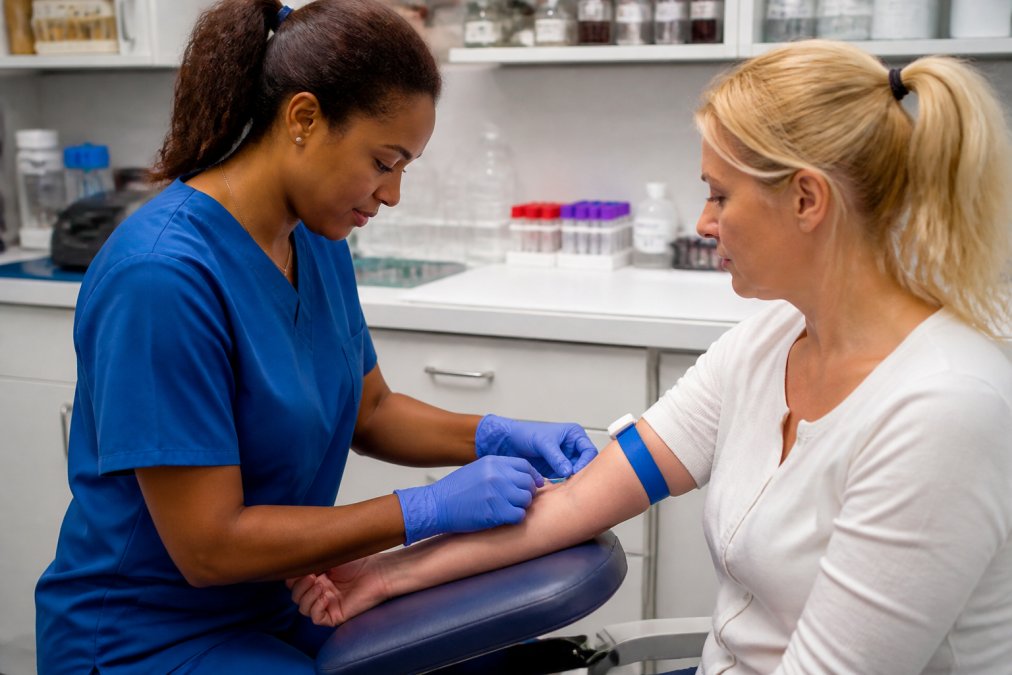
Getting accurate results starts before you arrive at the lab. How you prepare for your blood draw directly affects the reliability of your results, especially for hormones that fluctuate throughout the day and across your menstrual cycle.
Fasting requirements. Most hormone tests don’t require fasting, but if your provider is testing glucose, insulin, or lipids alongside your hormones, fast for 8-12 hours beforehand. Avoid heavy meals the morning of your draw.
Hydration matters. Drink water normally the day before and morning of your draw. Dehydration concentrates your blood, which can skew hormone readings higher than they actually are.
Stress and sleep. Get good sleep the night before if possible. Anxiety itself will elevate your cortisol at the moment of collection. If you have needle anxiety, let the phlebotomist know.
Medication timing. If you’re already on hormone replacement therapy or other medications, take them at your normal time unless your provider instructs otherwise. Stop any supplements containing hormones for at least two weeks prior to testing if establishing a baseline.
Cycle timing for menstruating women. The best time for comprehensive hormone testing is days 19-21 of your cycle (counting day 1 as the first day of bleeding). This is the luteal phase, when progesterone is at its peak.
Testing on day 5 of your cycle versus day 21 can give wildly different progesterone results, sometimes a difference of 10-fold. Always confirm the optimal timing with your provider before scheduling.
Best Time of Day for Hormone Blood Work
The time of day you get your blood drawn significantly affects your results, particularly for hormones with strong circadian rhythms like cortisol.
Cortisol has a predictable daily pattern. It peaks in the early morning (around 6-8 AM) and declines throughout the day, reaching its lowest point around midnight. Cortisol testing should happen in the morning, ideally between 7-9 AM, to capture your peak level and get a meaningful measurement.
Other hormones are more stable but still have variation. Estrogen and progesterone don’t have the dramatic circadian swing that cortisol does, but morning testing is still preferred for consistency and comparison to reference ranges.
Practical reality: morning appointments matter. This is why many functional medicine practitioners and integrative clinics prioritize early morning appointments for hormone testing. You’re getting the most reliable data and fasting naturally.
If you cannot do a morning draw, afternoon testing is acceptable for most hormones except cortisol. Just ensure your provider knows the time of day your sample was collected.
Understanding Your Results: Normal vs. Optimal Ranges
Your lab report will show your hormone levels alongside a "reference range" or "normal range." But normal and optimal are not the same thing.
Normal ranges are population averages, not health targets. A reference range is calculated from thousands of blood samples from a general population. If your value falls within that range, you’re "normal", but normal is just average. It doesn’t mean you’ll feel good or be free of symptoms.
For example, the reference range for estrogen in postmenopausal women might be 5-25 pg/mL. A woman with estrogen at 8 pg/mL is technically "normal" but may experience significant hot flashes, night sweats, vaginal dryness, and brain fog. A woman at 35 pg/mL might be technically "high" but feel completely normal and symptom-free.
Optimal ranges are individualized. Optimal is where YOU feel good, have stable energy, clear thinking, good sleep, and the absence of symptoms affecting your quality of life. A provider who understands hormone optimization interprets your numbers in the context of your symptoms, age, health goals, and individual tolerance for hormonal fluctuation.
A hormone value that’s technically “normal” on the lab report might be causing you significant symptoms. Optimal is about how you feel and function, not just about fitting within a statistical range.
From Test Results to Action: Building Your Hormone Optimization Plan
Having lab results in hand is the starting point. The real value emerges when you translate those results into a concrete action plan.

Step 1: Identify your hormonal pattern. Look at your results holistically. Are your estrogen and progesterone both low? Is one high and one low? Is your cortisol dysregulated? Your pattern determines your archetype and treatment strategy.
Step 2: Assess lifestyle factors first. Before jumping to hormone replacement, ask: Is your sleep optimized? Are you managing stress effectively? Is your nutrition supporting metabolic health? Many women see significant symptom improvement by fixing sleep, reducing chronic stress, and improving metabolic health.
Step 3: Determine your intervention strategy. Based on your labs and symptoms, your provider will recommend a path forward. This might be lifestyle optimization alone, targeted supplementation, bioidentical hormone replacement therapy, or a combination. The strategy is informed by data, not guessing.
Step 4: Set a retest timeline. If you’re starting any intervention, plan to retest in 6-8 weeks. You’re measuring actual hormone levels and adjusting from there, not relying on subjective feelings.
Step 5: Build in ongoing monitoring. Once you find your optimal dosage or intervention, annual or biannual testing keeps you on track. Your hormone needs may shift as you move through perimenopause, menopause, and beyond.
Lab-based hormone testing removes the guesswork from women’s midlife health. When you have objective data about your endocrine system, you can make informed decisions about whether hormone optimization is right for you and what approach will actually work. GAYA Wellness uses comprehensive serum hormone analysis as the foundation for personalized, data-driven care tailored to your unique hormonal archetype. Rather than accepting symptoms as inevitable, you’ll have a clear, lab-based plan that addresses the root cause. Book a consult to discover how precision hormone testing can transform your approach to midlife wellness.
Frequently Asked Questions
Is it worth it to get hormone levels tested?
Yes. Lab-based hormone testing provides objective data about your endocrine system that guides personalized treatment plans. For women experiencing fatigue, weight gain, mood changes, or irregular menstrual cycles, testing identifies specific imbalances rather than relying on guesswork. Results help determine whether symptoms stem from hormonal fluctuations, thyroid dysfunction, or other metabolic issues, allowing your healthcare provider to recommend targeted interventions rather than generic approaches.
What is the most accurate method of hormone testing?
Serum blood testing (laboratory-based hormone testing) is the gold standard for diagnostic accuracy. Blood serum analysis measures circulating hormone levels with clinical precision and is recognized by the medical community for establishing reference ranges and detecting conditions like PCOS, thyroid disease, and menopause transition. While saliva and at-home tests offer convenience, they lack the standardization and diagnostic validation of laboratory pathology testing, making them less reliable for medical decision-making.
When should hormone labs be drawn?
Timing depends on which hormones you're measuring. For menstrual cycle mapping, follicle-stimulating hormone (FSH) and estrogen are typically drawn on day 3 of your cycle. Progesterone is measured 7 days after ovulation (typically day 21 of a 28-day cycle). Cortisol follows a daily rhythm and is best drawn in the morning. Thyroid function and other hormones have fewer timing constraints. Your healthcare provider will specify the optimal timing based on your symptoms and health goals to ensure accurate results.
How do I know if my results are truly abnormal or just outside 'normal' range?
Lab reference ranges show where most people fall, but 'normal' doesn't always mean 'optimal' for your symptoms. A hormone level might be technically within range yet still too low to resolve your fatigue or brain fog. This is why working with a provider experienced in hormone optimization matters, they interpret results in context of your symptoms, age, menstrual status, and health goals rather than treating the number in isolation. Optimal ranges for midlife women often differ from standard clinical cutoffs.
This article was written using GrandRanker