

Table of Contents
- Step 1: Identify Your Dietary Triggers for Hot Flashes
- Step 2: Build Sleep Hygiene for Night Sweats That Works
- Step 3: Use Exercise and Weight Management to Reduce Hot Flashes
- Step 4: Dress in Layers and Control Your Environment
- Step 5: Track Triggers, Frequency, and Symptom Severity
- Step 6: Manage the Psychological Impact and Workplace Challenges
- Step 7: Know When Lifestyle Changes Need Hormone Optimization for Menopause
- Common Mistakes to Avoid When Trying Lifestyle Changes to Reduce Hot Flashes
- Frequently Asked Questions
Last Updated: September 29, 2026
Step 1: Identify Your Dietary Triggers for Hot Flashes
The fastest way to reduce hot flashes is to find which foods and drinks set yours off. Common culprits include caffeine, alcohol, spicy foods, and hot beverages.
Common Trigger Foods and Drinks to Track
Start with the usual suspects. Clinical guidance for 2026 flags caffeine, alcohol, spicy foods, and hot drinks as the most frequent triggers, along with warm rooms and high stress, according to ACOG’s tips for managing hot flashes.
Track these for two weeks:
- Coffee, black tea, and energy drinks
- Wine, beer, and cocktails
- Chili, curry, and hot sauce
- Hot soups and hot tea
- Large meals late at night
How a Plant-Based Diet Reduced Hot Flashes by 84%
Diet can also lower symptom frequency outright.
A plant-based diet rich in soy cut moderate-to-severe hot flashes by 84%, dropping frequency from nearly five per day to fewer than one, according to Physicians Committee for Responsible Medicine clinical research. Soy isoflavones appear to play a role.
Add one serving of soy daily, such as edamame, tofu, or tempeh, before overhauling your whole diet. Small changes are easier to stick with and still move the needle.
Step 2: Build Sleep Hygiene for Night Sweats That Works
Sleep hygiene for night sweats means cooling both your body and your bedroom before bed. Night sweats disrupt sleep, and poor sleep worsens symptoms the next day. Break the cycle with a cool room, breathable bedding, and a consistent bedtime.
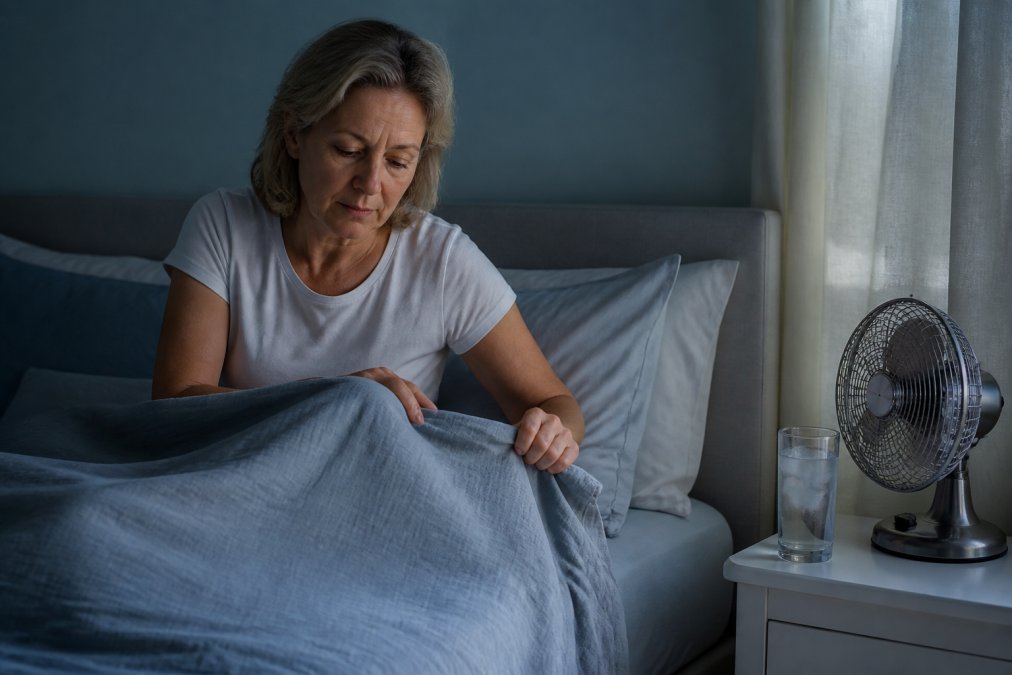
Cooling Your Bedroom and Your Core Body Temperature
Your core body temperature drops naturally to start sleep. Hot flashes interrupt that drop. Help it along:
- Take a cool shower before bed
- Keep ice water on the nightstand
- Use a bedside fan or portable fan
- Layer bedding so you can remove a layer without waking fully
- Wear moisture-wicking sleepwear
Step 3: Use Exercise and Weight Management to Reduce Hot Flashes
Exercise and weight management can reduce hot flashes by steadying estrogen levels and improving thermoregulation. Obesity is a known risk factor for hot flashes, and fat loss reduces symptom severity, per Cedars-Sinai and Examine.com research.
Aerobic Activity, Yoga, and Mind-Body Relaxation
Mind-body practices calm the nervous system, which helps with symptom frequency. Regular yoga and meditation are increasingly recommended to lower hot flash frequency, according to Doctronic’s clinical guidance.
Step 4: Dress in Layers and Control Your Environment
Layers give you control when a flash hits. Wear breathable natural fibers like cotton or linen next to your skin, then add a removable layer. Keep a portable fan and ice water within reach at home and at work.
Small environment tweaks add up:
- Lower the thermostat a few degrees
- Use a desk fan at work
- Choose breathable fabrics for bedding and clothing
- Avoid hot cars and stuffy rooms
Skipping layers to “tough it out” backfires. Without a removable layer, you have no fast way to cool down, and a single flash can derail a meeting or a night’s sleep.
Step 5: Track Triggers, Frequency, and Symptom Severity
Tracking turns guesswork into a plan. The difference between a vague log and a useful one is what you record and how you score it.
What to Log for Every Hot Flash
Record five fields, every time:
- Time of day, patterns often cluster in the evening or overnight.
- What you ate or drank in the two hours before, this is how you catch dietary triggers.
- Your stress level, rate it 1 to 5, where 1 is calm and 5 is highly stressed.
- Where you were, warm room, stuffy car, meeting, bed.
- Severity, use the scale below.
A Simple Severity Scale
- 1 = mild warmth, no sweat. Noticeable but not disruptive.
- 2 = noticeable heat, some sweat. You may want to remove a layer or step out.
- 3 = strong heat, drenching sweat, sleep disruption. This is the level that interferes with work, sleep, and mood.
Add a sixth field if night sweats are an issue: did it wake you? Yes or no. That single data point tells you whether your sleep hygiene changes are working.
How to Read Your Log After Two to Three Weeks
Patterns emerge faster than people expect. Look for:
- Repeating triggers: the same food, drink, or situation showing up before multiple flashes.
- Time clusters: most flashes at 2 a.m. or 3 p.m. suggest a temperature or schedule fix.
- Stress correlation: if your severity-3 flashes line up with stress-4 and stress-5 days, stress skills are your next lever.
- Frequency trend: count flashes per day, week one versus week three. A drop from five a day to three is real progress, even if it does not feel dramatic.
A Printable Symptom Diary You Can Copy
You do not need an app. A notebook or spreadsheet with these columns works:
| Date | Time | Food/Drink (last 2 hrs) | Stress (1-5) | Location | Severity (1-3) | Woke Me? |
|---|---|---|---|---|---|---|
Two weeks of tracking often reveals one or two clear triggers. Fixing those beats overhauling everything at once. Bring the log to your next appointment so your clinician can read it against your labs and adjust your plan.
Common Tracking Mistakes
- Logging only bad days. Mild flashes matter because they show the baseline.
- Changing three things at once. You lose the ability to attribute the change.
- Quitting after a week. Two to three weeks is the minimum for a pattern to show.
- Not bringing the log to your doctor. The data is most useful when a clinician can review it with you.
Step 6: Manage the Psychological Impact and Workplace Challenges
Hot flashes affect mood, focus, and confidence, and most guides skip this part. Anxiety and embarrassment can spike symptom frequency, since stress is a known trigger. Address the mental side alongside the physical.
The Anxiety-Sleep-Hot-Flash Cycle
There is a loop that keeps symptoms alive, and naming it is the first step to breaking it:
- A hot flash wakes you or interrupts your focus.
- You worry about the next one, especially in public or at work.
- That worry raises your stress level, which is a known trigger.
- Poor sleep from night sweats lowers your threshold the next day.
- The next flash feels worse, and the worry grows.
Stress Reduction That Actually Lowers Symptom Frequency
Mindfulness-based stress reduction and paced breathing lower stress and, in turn, symptom frequency. A simple routine:
- Paced breathing: slow to about six breaths per minute for two minutes when a flash starts or when you feel one building.
- Body scan: two to five minutes before bed to release tension that feeds night sweats.
- Cognitive reframing: replace “everyone can see this” with “this will pass in a few minutes,” which lowers the stress spike that prolongs the episode.
- Movement breaks: a short walk resets both stress and body temperature better than sitting still and stewing.
Workplace Accommodations You Can Actually Ask For
Most guides stop at “wear layers.” The workplace is where hot flashes cause the most embarrassment, and small, specific accommodations make the biggest difference. You do not need a formal diagnosis to ask for most of these.
Environment:
- Request a desk near a window, vent, or air return.
- Keep a small desk fan and a spare breathable top in your bag or drawer.
- Ask to move a meeting to a cooler room if one is available.
Scheduling:
- Put high-stakes presentations or interviews in the cooler parts of the day, often early morning.
- Build a two-minute buffer before meetings so you can cool down and reset.
- Avoid back-to-back meetings in warm conference rooms when you can.
Communication:
- Tell a trusted manager or colleague if you want support. A simple script: “I get warm spells during the day. If I step out for a minute or use a fan, that is why.”
- If you need a formal accommodation, human resources can discuss flexible seating, temperature control, or a modified dress code. Menopause is not a protected class under federal law the way pregnancy is, but many employers accommodate these requests as a matter of policy, and some state and local laws offer additional protection. Managing these environmental adjustments often highlights other physiological shifts, such as the persistent discomfort of dry skin during menopause that may also require a proactive approach to your daily routine.
Travel and events:
- Pack a fan, a spare shirt, and blotting cloths for conferences.
- Choose aisle seats so you can step out without disturbing others.
- Layer over a breathable base so you can remove one piece without changing your whole outfit.
Pick one workplace change this week, not five. A desk fan and a window seat are easy wins that reduce both the physical heat and the anticipatory anxiety that makes flashes worse.
When to Bring in More Support
If hot flashes are driving anxiety, avoiding social or work situations, or disrupting sleep most nights, talk to a clinician. Lifestyle changes and stress skills are the foundation, but not the only tool, a board-certified OB-GYN can review your symptoms and discuss whether additional treatment is right for you.
Step 7: Know When Lifestyle Changes Need Hormone Optimization for Menopause
Lifestyle changes handle mild symptoms well. For moderate-to-severe hot flashes and night sweats, hormone therapy is often a more effective clinical intervention, per Mayo Clinic guidance on menopause treatment.
Know the signs it’s time to ask for more:
- Symptoms disrupt sleep most nights
- Flashes interfere with work or daily life
- Lifestyle changes haven’t moved the needle after 8-12 weeks
Common Mistakes to Avoid When Trying Lifestyle Changes to Reduce Hot Flashes
The biggest mistake is changing everything at once. You can’t tell what worked. Change one thing, track it for two weeks, then decide.
Other traps:
- Cutting soy when it may actually help
- Skipping exercise because flashes feel worse mid-workout
- Ignoring sleep, which magnifies every symptom
- Waiting too long to ask about hormone therapy
| Mistake | Fix | Why It Matters |
|---|---|---|
| Changing everything at once | Change one habit per two weeks | You can’t tell what worked |
| Avoiding soy | Add one daily serving | Soy isoflavones may cut flashes |
| Skipping exercise | Aim for 150 minutes weekly | Helps weight and thermoregulation |
| Ignoring sleep | Cool room, breathable bedding | Poor sleep worsens symptoms |
| Delaying care | Ask about hormone therapy | Lifestyle may not be enough |
Frequently Asked Questions
Are there specific dietary triggers that worsen hot flashes?
Yes. Clinical guidance from ACOG and other OB-GYN sources identifies caffeine, alcohol, spicy foods, and hot drinks as common triggers for hot flashes. These can raise core body temperature or dilate blood vessels, prompting a flush. Tracking what you eat and drink alongside your symptoms for two weeks can reveal your personal pattern. Many women find that cutting caffeine after noon and limiting alcohol reduces both frequency and severity within a month.
How does regular exercise impact the frequency of hot flashes?
Regular aerobic activity helps regulate core body temperature and supports weight management, which matters because obesity is a risk factor for hot flashes. Research from Cedars-Sinai and Examine.com shows that fat loss reduces vasomotor symptom severity. Yoga and meditation are also cited in 2026 clinical guidance as practices that may lower overall hot flash frequency by supporting the body’s stress response and thermoregulation.
What natural supplements can help with hot flashes?
Soy isoflavones have the strongest clinical backing. A Physicians Committee for Responsible Medicine study found that a plant-based diet rich in soy reduced moderate-to-severe hot flashes by 84%, from nearly five per day to fewer than one. A 2024 Australian study also found that women following a Mediterranean-style diet were 20% less likely to experience hot flashes and night sweats. Always discuss supplements with your OB-GYN before starting them.
When should I consult an OB-GYN about my hot flash symptoms?
If lifestyle changes have not reduced your symptoms after eight to twelve weeks, or if hot flashes disrupt your sleep, work, or daily functioning, it is time to see an OB-GYN. A 2026 clinical review notes that while lifestyle modifications work well for mild symptoms, hormone therapy is often more effective for moderate-to-severe hot flashes and night sweats. A board-certified OB-GYN can review your labs, symptom history, and goals to build a personalized plan.
Hot flashes don’t have to run your day. If you’ve tracked triggers, cooled your environment, and still wake up soaked, it’s time for a plan built around your labs, not guesswork. GAYA Wellness offers concierge virtual and in-office OB/GYN care, personalized hormone optimization, and medical weight loss support for women 40 and beyond. Get started with GAYA Wellness and follow a clear, lab-based plan tailored to your goals.