

Table of Contents
- The Scope of the Problem: Why Doctors Dismiss Menopause Symptoms
- Lack of Formal Menopause Training in Medical School
- How to Talk to Your Doctor About Perimenopause
- Common Symptoms Doctors Overlook or Misdiagnose
- Menopause Symptom Tracking Tools and Documentation
- Finding a Menopause-Certified Practitioner
- Systemic Barriers and What Needs to Change
- Your Path Forward
Last Updated: August 24, 2026
The Scope of the Problem: Why Doctors Dismiss Menopause Symptoms
Approximately 6,000 women enter menopause daily, yet roughly 63.2% of women have felt dismissed by a medical provider regarding their menopause symptoms RegenCen 2026 national menopause care survey. This is a systemic failure, not a perception problem. Fewer than 20% of primary care physicians receive formal menopause training The Menopause Society via CBS News, so most doctors lack foundational knowledge to recognize, diagnose, or treat what their patients experience. When a woman describes hot flashes, brain fog, or mood changes, her doctor may attribute these to stress, aging, or depression rather than hormonal fluctuations.
Only 17.1% of women in a recent study received treatment for menopausal symptoms, despite 87% of women ages 45 to 60 never seeking care for these symptoms, many because they were too busy or didn’t know treatment options existed Mayo Clinic Proceedings via CBS News. This creates a vicious cycle: women suffer in silence, doctors don’t see patients with menopause complaints, and the system never learns to recognize the problem. Emotional and cognitive symptoms like anxiety, brain fog, and anger appear 2.6 to 3.6 times more often in online menopause forums than in doctors’ electronic health records, signaling that women are experiencing symptoms their doctors aren’t documenting or taking seriously.
Lack of Formal Menopause Training in Medical School
Medical schools have failed to prioritize menopause education. Only 6.8% of obstetrics and gynecology, family medicine, and internal medicine residents felt adequately prepared to manage menopause after graduation. Additionally, 69% of OB/GYN program directors reported lacking a formal menopause curriculum entirely, meaning women seeking care from specialists often encounter providers who received minimal training on the subject.
"Do most practicing ob-gyns have sufficient nuanced knowledge about menopause and how to treat its symptoms? I don’t think so.", JoAnn Pinkerton, Executive Director at North American Menopause Society (NAMS)
When doctors lack education on menopause, they miss diagnoses, dismiss symptoms as psychological, or recommend treatments that don’t address underlying hormonal issues. The result is inadequate or inappropriate care during one of the most significant health transitions of women’s lives.
The good news is that this is beginning to change. The Menopause Society’s ranks have grown from 2,000 to nearly 12,000 in the past five years, with approximately 4,100 certified menopause practitioners now available, up from about 1,000 a decade ago. But supply still falls far short of demand.
How to Talk to Your Doctor About Perimenopause
Knowing how to communicate with your doctor about perimenopause is essential when dismissal happens so frequently. The conversation can mean the difference between being heard and being dismissed.

Start by documenting everything. Track your symptoms for at least two weeks before your appointment, noting the time of day, severity (on a scale of 1-10), and any triggers. Include hot flashes, night sweats, mood changes, sleep disruption, and brain fog. This documentation becomes your evidence, it’s harder for a doctor to dismiss symptoms when you have data.
Come prepared with specific language. Instead of saying "I feel awful," try: "I’m experiencing hot flashes five to seven times daily, night sweats that wake me three to four times per night, and my mood is more irritable than usual. This started about six months ago and is affecting my work and sleep." Specificity makes your symptoms real and measurable.
Ask directly about perimenopause and menopause using these terms explicitly: "Could my symptoms be related to perimenopause?" or "I’d like to discuss whether hormone therapy might help." Bring a written list of questions: What tests can confirm perimenopause? What treatment options are available? What are the risks and benefits of hormone therapy? If your doctor dismisses your concerns, ask why and request an explanation of what they think is causing your symptoms.
Consider bringing a trusted person to your appointment. A partner, friend, or family member can help advocate for you and remember details from the conversation.
Common Symptoms Doctors Overlook or Misdiagnose
Doctors often misinterpret menopause symptoms as other conditions, leading to unnecessary treatment or no treatment at all.
Brain fog and memory issues are frequently attributed to stress, aging, or early dementia rather than hormonal fluctuations. A woman might be referred to a neurologist when she actually needs hormone optimization.
Mood changes, including anxiety, irritability, and depression, are commonly treated as psychiatric issues. A woman experiencing increased anxiety during perimenopause might be prescribed an antidepressant when estrogen fluctuation is the root cause.
Sleep disruption gets attributed to insomnia or sleep apnea rather than night sweats and hormonal changes. Doctors may recommend sleep studies without addressing the vasomotor symptoms keeping women awake.
Weight gain and metabolic changes are often blamed on poor diet or lack of exercise, ignoring real metabolic shifts that occur with declining estrogen. Women report gaining 10-15 pounds despite no change in habits. boosting metabolism after 40.
Joint and muscle pain may be diagnosed as arthritis or fibromyalgia when it’s actually related to hormonal fluctuations.
Vaginal dryness and sexual dysfunction are often not discussed at all, despite significantly affecting quality of life.
Hot flashes and night sweats, the most recognized symptoms, are still minimized by many doctors rather than offered evidence-based treatment options.
Menopause Symptom Tracking Tools and Documentation
Tracking your symptoms creates a record that’s difficult for doctors to dismiss and helps you identify patterns.
| Tracking Method | Best For | How It Helps |
|---|---|---|
| Symptom diary (paper or notes app) | Detailed daily records | Shows frequency, timing, and triggers |
| Wearable trackers (Oura, Apple Watch) | Sleep and heart rate data | Provides objective data on sleep disruption |
| Menopause-specific apps (Clue, Flo) | Tracking multiple symptoms | Organizes data by symptom type and severity |
| Spreadsheet with dates/times | Comprehensive tracking | Easy to share with your doctor |
| Photo/voice notes | Quick logging throughout day | Captures real-time observations |
The most effective approach combines methods. Use a simple spreadsheet or app to track symptoms daily, noting time, symptom type, severity (1-10), and potential triggers. Add wearable data if available. When you visit your doctor, bring a printed summary showing "hot flashes: 6-8 per day, 5 days per week" or "night sweats: 3-4 episodes nightly, resulting in 4-5 hours sleep", this is much harder to dismiss than a verbal description. Tracking alone often validates your experience and builds confidence when talking to healthcare providers.
Finding a Menopause-Certified Practitioner
Not all doctors are created equal when it comes to menopause care. Finding a menopause-certified practitioner can mean the difference between dismissal and comprehensive, evidence-based treatment.
The Menopause Society (NAMS) offers certification for menopause practitioners who have completed specialized training and passed an examination. Approximately 4,100 certified menopause practitioners are currently available in the United States. Visit the NAMS website and use their provider directory, searching by location for board-certified menopause specialists.
What to look for in a menopause practitioner:
- Board certification in OB/GYN, family medicine, or internal medicine
- Additional menopause certification from NAMS or similar organization
- Willingness to discuss hormone therapy as an option
- Evidence-based approach to treatment decisions
- Time to listen, good menopause care requires more than a 15-minute appointment
- Willingness to order appropriate testing if needed
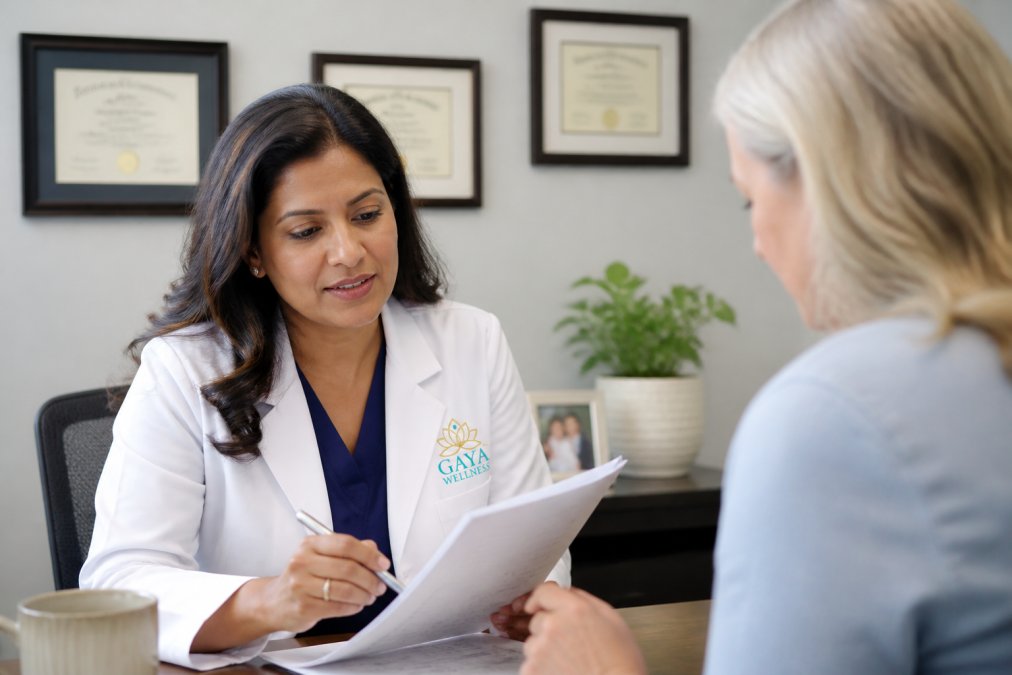
GAYA Wellness, led by board-certified OB/GYN and U.S. Navy veteran Dr. Shweta Patel, specializes in menopause and midlife health. The practice uses a proprietary Hormonal Archetype™ framework to create personalized, data-driven treatment plans. If you can’t find a certified menopause specialist nearby, a concierge or telehealth practice focused on menopause may be your best option.
Systemic Barriers and What Needs to Change
The dismissal of menopause symptoms is rooted in how medicine is structured, funded, and taught.
Insurance and reimbursement barriers make it harder for doctors to spend time on menopause care. Standard office visits last 15-20 minutes, insufficient for thorough menopause assessment. Doctors are reimbursed based on volume, not quality, incentivizing quick appointments and dismissals.
The absence of menopause in medical education perpetuates the problem. Medical schools need mandatory menopause curricula, and residency programs need dedicated menopause rotations.
Cultural stigma around menopause discourages both patients and providers from discussing it openly. Menopause has historically been treated as inevitable decline rather than a medical transition requiring care.
Outdated guidelines on hormone replacement therapy still influence clinical practice. Though the FDA removed black box warnings on estrogen products in November 2025, many doctors still practice as if they’re in effect.
Legislative change is beginning to address barriers. Louisiana mandated Medicaid and private health insurance coverage for perimenopause and menopause treatments, and Illinois expanded similar coverage effective January 2026. Academic medical centers including Mayo Clinic, NYU Langone, UCLA, Johns Hopkins, and University of Utah have launched dedicated menopause health programs.
Your Path Forward
The dismissal you’ve experienced isn’t your fault, and it isn’t inevitable. You have agency in this process. Start by tracking your symptoms and documenting their impact on daily life. Prepare for your next doctor’s appointment with specific language and written questions. If your current provider dismisses your concerns, find a menopause-certified practitioner or consider a specialized practice focused on midlife health.
Remember that you know your body better than anyone else. If something feels wrong, it probably is. Trust that instinct and don’t accept dismissal as a final answer.
If you’ve felt dismissed by traditional healthcare providers and want a comprehensive, evidence-based approach to menopause, consider consulting with a menopause specialist. GAYA Wellness offers personalized, data-driven menopause care led by board-certified OB/GYN Dr. Shweta Patel. Using the proprietary Hormonal Archetype™ framework, the practice creates individualized treatment plans based on your unique symptoms, labs, and health goals, not a one-size-fits-all approach. Book a consultation to stop guessing and start following a clear plan for your hormonal health.
Frequently Asked Questions
What are the most common menopause symptoms that doctors dismiss?
Doctors frequently overlook emotional and cognitive symptoms like anxiety, brain fog, and mood changes. Research shows these symptoms appear 2.6 to 3.6 times more often in women's own reports than in medical records. Hot flashes, night sweats, and sleep disturbances are sometimes attributed to stress or other conditions. Weight gain, joint pain, and vaginal dryness are also commonly dismissed as unrelated to menopause. Many doctors treat symptoms individually rather than recognizing them as part of hormonal fluctuation during perimenopause or menopause.
Why is menopause often overlooked in standard medical training?
Fewer than 20% of primary care physicians receive formal menopause training, and only 6.8% of residents across obstetrics, family medicine, and internal medicine feel adequately prepared to manage menopause after graduation. Menopause receives less than 10% coverage in most medical residencies. This systemic gap in education means many providers lack the knowledge to recognize symptoms, discuss treatment options, or understand the long-term health implications. The Menopause Society found that 69% of OB/GYN training programs lack a formal menopause curriculum, perpetuating this cycle of inadequate care.
How can I prepare for a doctor's appointment to ensure my menopause symptoms are taken seriously?
Document your symptoms in detail before your visit, noting when they occur, their severity, and how they affect your daily life. Bring a written list of questions and concerns, this prevents them from being forgotten or dismissed. Use specific language: instead of 'I feel bad,' say 'I have hot flashes 8 times daily that wake me at night, affecting my sleep and work performance.' Ask your doctor directly about perimenopause and menopause as possible causes. If symptoms are dismissed, ask why and request referral to a menopause-certified practitioner or a second opinion.
What is the difference between traditional OB/GYN care and menopause-specialized care?
Traditional OB/GYNs focus primarily on reproductive health and may treat menopause as a brief transitional phase rather than a complex health stage requiring specialized management. Menopause-certified practitioners have advanced training in symptom assessment, hormone replacement therapy options, long-term preventative care, and the impact of hormonal changes on bone health, cardiovascular health, and cognitive function. Specialized care uses evidence-based protocols, discusses risks and benefits of treatment comprehensively, and creates individualized plans based on your unique health profile and goals.
This article was written using GrandRanker