

Table of Contents
- What Longevity Medicine for Women 50+ Really Means
- Hormone Optimization for Women 50+ and Healthspan
- Benefits of HRT for Longevity: Heart, Brain, and Bone Health
- Medical Weight Loss for Women Over 50: Why Standard Diets Fail
- The Five Habits That Add 14 Years to Your Life
- Precision Diagnostics: The Data-Driven Approach to Longevity
- Emotional and Psychological Longevity: What Doctors Often Miss
- Building Your Personalized Longevity Plan
Last Updated: August 30, 2026
What Longevity Medicine for Women 50+ Really Means
Longevity medicine for women 50+ represents a shift from treating disease to optimizing healthspan, the years you live in good health. It’s not about adding decades; it’s about making the decades you have count.
Traditional medicine waits for problems to appear, then treats them. Longevity medicine uses data, diagnostics, and prevention to keep your body functioning optimally before symptoms emerge. Women live 5-6 years longer than men on average, but spend 25% more years in poor health (Global Wellness Summit, 2026) (globalwellnessinstitute.org).
According to research from the Global Wellness Summit, the longevity market is pivoting toward comprehensive medical-wellness programs. Hormone replacement therapy is being reframed as longevity medicine, not just symptom relief.
At GAYA Wellness, we approach longevity medicine through a clinical lens: personalized plans based on labs, symptoms, and your unique hormonal archetype to extend your healthspan.
Longevity medicine for women 50+ is preventative medicine that uses data and diagnostics to optimize health before problems develop, addressing the reality that women spend significantly more years in poor health despite longer lifespans.
Hormone Optimization for Women 50+ and Healthspan
Hormone optimization sits at the center of longevity medicine for women 50+. Ovarian decline during perimenopause and menopause accelerates systemic aging across the heart, brain, bones, and metabolic function.
Women experience a 30% faster decline in NAD+ levels than men between ages 35 and 50 (Ageing Research Reviews, 2023) (peer-reviewed research).
Hormone optimization stabilizes the hormonal environment your body needs to function optimally, affecting metabolism, brain function, cardiovascular health, bone density, sleep, and stress resilience.
The Case for HRT as Longevity Medicine
Recent data suggests that middle-aged women could use HRT to protect their brains, contradicting old concerns about dementia risk (Business Insider, August 2026). The consensus among longevity specialists is clear: early intervention, close to menopause onset, is preferable for brain health. HRT provides significant heart, brain, and bone health benefits, but timing and formulation matter enormously.
The key insight most guides miss: HRT isn’t one-size-fits-all. The Women’s Health Initiative study, often cited to discourage HRT, involved older women starting hormones years after menopause. Timing changes everything.
Starting HRT years after menopause ends carries different risks than starting during perimenopause. The window for optimal benefit is narrow; discuss timing with a qualified physician who understands longevity medicine, not just symptom management.
Bioidentical vs. Synthetic Hormones
Bioidentical hormones are molecularly identical to the hormones your body produces. Synthetic hormones have a different molecular structure. What matters more is the dose, delivery method, formulation, and whether it matches your individual needs.
Evidence suggests certain bioidentical formulations, combined with progesterone delivered via micronized or transdermal methods, may carry lower risk profiles than older synthetic formulations. What actually matters: working with a provider who tests your hormone levels, monitors your response, and adjusts based on data.
Benefits of HRT for Longevity: Heart, Brain, and Bone Health
The longevity case for HRT rests on three systems: cardiovascular, neurological, and skeletal.
Cardiovascular Health: Estrogen protects the endothelium and maintains healthy cholesterol profiles. After menopause, cardiovascular disease becomes the leading cause of death for women. Early HRT appears to reduce this risk when started close to menopause onset.
Brain Health: Estrogen supports cognitive function and neuroplasticity. Studies suggest HRT, started early, may protect against cognitive decline and support memory function into later years.
Bone Health: Estrogen is critical for bone density. Postmenopausal women lose bone density rapidly, increasing fracture risk. HRT slows this loss. Combined with strength training, it’s one of the most effective interventions for maintaining skeletal health. bioactive skincare routines.
These systems work together, optimizing hormones creates cascading benefits across multiple body systems.
Medical Weight Loss for Women Over 50: Why Standard Diets Fail
Metabolic changes during perimenopause and menopause are significant. Estrogen decline reduces your resting metabolic rate. Your body becomes more insulin-resistant. Appetite regulation shifts. Muscle loss accelerates. Standard calorie-restriction diets fail because they don’t account for these hormonal realities.
Medical weight loss for women over 50 combines hormone optimization, metabolic testing, targeted nutrition, and sometimes medication (like GLP-1 analogs) to address the actual problem.
The concierge medicine market is projected to grow from about $8 billion in 2025 to $19.36 billion by 2034 (Patientfy, 2026). This growth is driven partly by demand for personalized weight loss and metabolic optimization programs.
What separates effective medical weight loss from failed diets: data. Lab work identifying insulin resistance, metabolic dysfunction, or hormonal imbalances, then adjusting based on your individual physiology.
If standard diets have failed you, the problem isn’t willpower, your metabolism has changed. Medical weight loss programs that test metabolic markers and adjust hormones accordingly work where generic approaches don’t.
The Five Habits That Add 14 Years to Your Life
Harvard University tracked over 78,000 women for 34 years. Five simple daily habits added an average of 14 years to a woman’s life expectancy at age 50 (Futura Sciences, 2026).
The five habits are:
- Never smoking
- 30+ minutes of moderate-to-vigorous exercise daily
- BMI between 18.5 and 24.9
- Top 40% Healthy Eating Index score
- Limited alcohol consumption
This magnitude of effect, fourteen years, is transformational.
Sleep: The Longevity Foundation
Sleep might be the most underrated longevity intervention. Consistently sleeping fewer than seven hours per night correlates with a sharp drop in life expectancy, registering an impact second only to smoking (Oregon Health and Science University, 2026).
For women over 50, sleep becomes harder due to hormonal shifts and hot flashes. Sleep optimization involves consistent sleep and wake times, cool bedroom temperature, limiting screen time before bed, and addressing hormonal factors that disrupt sleep. Getting this right compounds every other longevity intervention.
Strength Training and Metabolic Health
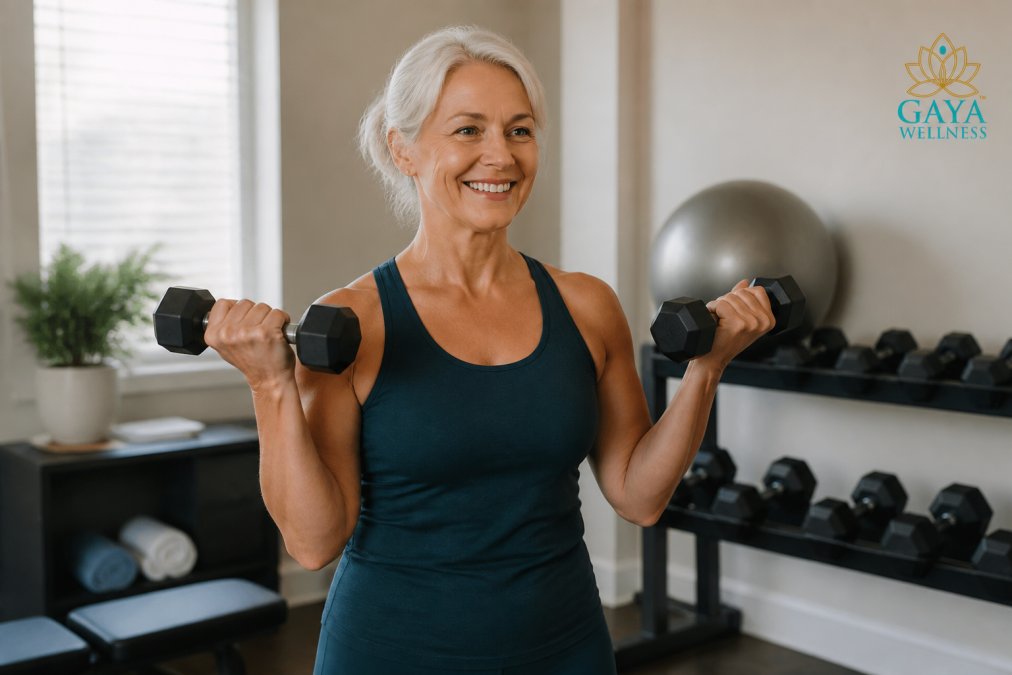
Strength training is a powerful metabolic intervention. A June 2026 study in the British Journal of Sports Medicine found that 90 to 120 minutes of strength training per week was linked to a 13% lower risk of death from any cause, a 19% lower risk of cardiovascular death, and a 27% lower risk of neurological death (SUCCESS Magazine, 2026).
Strength training preserves muscle mass, improves insulin sensitivity, strengthens bones, and enhances metabolic function. For women over 50, it’s non-negotiable.
Precision Diagnostics: The Data-Driven Approach to Longevity
Longevity medicine relies on standardized testing, not guessing. The right diagnostics include comprehensive metabolic panels, lipid profiles, inflammatory markers (hs-CRP), fasting insulin and glucose, hormonal panels, thyroid function, vitamin D, B12, and iron status.
Precision diagnostics reveal what’s actually happening in your body. You might feel fine but have early insulin resistance. You might feel fatigued but have normal TSH. Your longevity plan can then address real problems, not assumed ones.
Emotional and Psychological Longevity: What Doctors Often Miss
Most longevity medicine focuses on the physical. But psychological resilience and emotional connection are longevity factors. A study of 2.3 million adults found that social isolation increases premature death risk by about 30%, comparable to smoking 15 cigarettes per day (SUCCESS Magazine, citing Stanford Medicine, 2026).
A Yale School of Public Health study found that people holding more positive attitudes about aging were significantly more likely to show gains in cognitive and physical function. The study tracked nearly 4,000 adults aged 19 to 94 and found 45% of adults 65+ improved in at least one area, with strong correlation to positive mindset about aging.

Your psychological state affects your physiology. Chronic stress elevates cortisol, accelerating aging. Social isolation impairs immune function. Longevity medicine that ignores this is incomplete.
Building Your Personalized Longevity Plan
A longevity plan for women 50+ is built on three pillars: your data, your symptoms, and your goals.
Start with diagnostics. Get comprehensive baseline labs to understand your metabolic health, hormonal status, and any early markers of dysfunction.
Address hormones strategically. Determine whether hormone optimization is right for you, what type, and at what dose. This requires clinical judgment.
Optimize the five habits. Sleep, exercise, nutrition, smoking status, and alcohol consumption are non-negotiable but need tailoring to your individual physiology.
Add precision interventions. Based on your labs and symptoms, add targeted interventions like specific supplements, medications, or lifestyle changes.
Monitor and adjust. Retest every 6-12 months and adjust based on results and how you feel.
| Component | Frequency | Why It Matters |
|---|---|---|
| Comprehensive labs | Annually | Reveals early dysfunction before symptoms appear |
| Hormone assessment | Annually or as needed | Ensures hormones remain optimized for your goals |
| Sleep tracking | Ongoing | Sleep quality directly impacts all other interventions |
| Strength training | 90-120 min/week | Strongest predictor of longevity and metabolic health |
| Social connection | Daily | Mortality risk reduction comparable to smoking cessation |
GAYA Wellness builds personalized longevity plans using this framework: lab data, your hormonal archetype, your goals, and evidence-based interventions.
The longevity medicine market is projected to reach $67.03 billion by 2035 (SNS Insider). But the real value is in the extra years of health you gain.
Longevity medicine for women 50+ works because it treats you as an individual. It uses data instead of assumptions. It addresses root causes instead of symptoms. Your health in the second half of your life deserves precision and attention.
If you’re ready to move beyond guessing and start following a clear, lab-based plan tailored to your unique needs, book a consultation with GAYA Wellness to discuss your longevity goals with Dr. Shweta Patel and her team.
=== FAQ ANSWERS (audit these too, same rules) ===
[1] Q: What is the difference between lifespan and healthspan, and why does it matter for women over 50?
A: Lifespan is how long you live; healthspan is how many of those years you live in good health. Women live 5-6 years longer than men on average, but spend 25% more years in poor health. Longevity medicine focuses on extending healthspan, the years you can move, think, and enjoy life without chronic disease. For women 50+, this distinction is critical because a longer life without vitality isn’t the goal. The aim is to maximize the active, independent years ahead.
[2] Q: Is hormone replacement therapy (HRT) safe for longevity, and what does the latest research say?
A: Recent research shows HRT, when started early in the menopause transition, supports longevity for heart, brain, and bone health. A 2026 study found that middle-aged women can use HRT to protect their brains, contradicting older concerns about dementia risk. The consensus among longevity medicine practitioners is that early intervention, close to menopause onset, is preferable. The timing, formulation, and individual risk profile matter significantly. Discuss your specific situation with a qualified physician who specializes in hormone optimization.
[3] Q: How can five simple daily habits add 14 years to my life?
A: A Harvard study tracking 78,865 women over 34 years found that five habits, never smoking, 30+ minutes of moderate-to-vigorous exercise daily, a BMI between 18.5 and 24.9, a top-40% Healthy Eating Index score, and limited alcohol consumption, added an average of 14 years to women’s life expectancy at age 50. These habits work by reducing inflammation, supporting metabolic health, and lowering risk of cardiovascular disease and cancer. The power isn’t in perfection; it’s in consistency and the compounding effect over time.
[4] Q: Why does sleep matter so much for longevity, and how much do I need?
A: Sleep deprivation correlates with a sharp drop in life expectancy, second only to smoking in its impact. A 2026 study found that consistently sleeping fewer than seven hours per night significantly reduces longevity. During menopause, sleep disruption is common due to hot flashes and hormonal shifts, making sleep optimization a critical longevity intervention for women 50+.
[5] Q: What role do biomarkers and lab testing play in a personalized longevity plan?
A: Biomarkers, measurable indicators like inflammation levels, insulin sensitivity, bone density, and hormone levels, provide a data-driven baseline for your health and reveal which interventions will have the greatest impact for you specifically. Rather than following a generic wellness plan, precision diagnostics allow you to identify metabolic vulnerabilities, optimize hormone levels, and track whether your interventions are working. This clinical lens is central to longevity medicine; it replaces guesswork with measurable outcomes.
[6] Q: How is medical weight loss for women over 50 different from standard dieting?
A: Standard diets often fail women 50+ because they don’t account for hormonal changes, metabolic slowdown, and the loss of muscle mass that accelerates after menopause. Medical weight loss combines metabolic assessment, hormone optimization, targeted nutrition, and strength training under clinical supervision. This approach addresses the underlying metabolic dysfunction rather than just calorie restriction. Success depends on treating the hormonal and metabolic causes of weight gain, not willpower alone.
[7] Q: Can social connection really affect how long I live?
A: Yes. A study of 2.3 million adults found that social isolation increases the risk of premature death by about 30%, comparable to smoking 15 cigarettes per day. Longevity research shows that meaningful relationships, community engagement, and a sense of purpose are as important as diet and exercise for extending both lifespan and healthspan. For women 50+, investing in relationships and community is a longevity intervention backed by evidence.
[8] Q: How much strength training do I need for longevity benefits?
A: A June 2026 study in the British Journal of Sports Medicine found that 90 to 120 minutes of strength training per week was linked to a 13% lower risk of death from any cause, a 19% lower risk of cardiovascular death, and a 27% lower risk of neurological death. Strength training combats sarcopenia (age-related muscle loss) and supports metabolic health, bone density, and cognitive function. Aerobic and strength training operate on different biological pathways, so both are valuable for maximum longevity benefit.
Frequently Asked Questions
Q: What is the difference between lifespan and healthspan, and why does it matter for women over 50?
A: Lifespan is how long you live; healthspan is how many of those years you live in good health. Women live 5-6 years longer than men on average, but spend 25% more years in poor health. Longevity medicine focuses on extending healthspan, the years you can move, think, and enjoy life without chronic disease. For women 50+, this distinction is critical because a longer life without vitality isn't the goal. The aim is to maximize the active, independent years ahead.
Q: Is hormone replacement therapy (HRT) safe for longevity, and what does the latest research say?
A: Recent research shows HRT, when started early in the menopause transition, supports longevity for heart, brain, and bone health. A 2026 study found that middle-aged women can use HRT to protect their brains, contradicting older concerns about dementia risk. The consensus among longevity medicine practitioners is that early intervention, close to menopause onset, is preferable. The timing, formulation, and individual risk profile matter significantly. Discuss your specific situation with a qualified physician who specializes in hormone optimization.
Q: How can five simple daily habits add 14 years to my life?
A: A Harvard study tracking 78,865 women over 34 years found that five habits, never smoking, 30+ minutes of moderate-to-vigorous exercise daily, a BMI between 18.5 and 24.9, a top-40% Healthy Eating Index score, and limited alcohol consumption, added an average of 14 years to women's life expectancy at age 50. These habits work by reducing inflammation, supporting metabolic health, and lowering risk of cardiovascular disease and cancer. The power isn't in perfection; it's in consistency and the compounding effect over time.
Q: Why does sleep matter so much for longevity, and how much do I need?
A: Sleep deprivation correlates with a sharp drop in life expectancy, second only to smoking in its impact. A 2026 study found that consistently sleeping fewer than seven hours per night significantly reduces longevity. During menopause, sleep disruption is common due to hot flashes and hormonal shifts, making sleep optimization a critical longevity intervention for women 50+.
Q: What role do biomarkers and lab testing play in a personalized longevity plan?
A: Biomarkers, measurable indicators like inflammation levels, insulin sensitivity, bone density, and hormone levels, provide a data-driven baseline for your health and reveal which interventions will have the greatest impact for you specifically. Rather than following a generic wellness plan, precision diagnostics allow you to identify metabolic vulnerabilities, optimize hormone levels, and track whether your interventions are working. This clinical lens is central to longevity medicine; it replaces guesswork with measurable outcomes.
Q: How is medical weight loss for women over 50 different from standard dieting?
A: Standard diets often fail women 50+ because they don't account for hormonal changes, metabolic slowdown, and the loss of muscle mass that accelerates after menopause. Medical weight loss combines metabolic assessment, hormone optimization, targeted nutrition, and strength training under clinical supervision. This approach addresses the underlying metabolic dysfunction rather than just calorie restriction. Success depends on treating the hormonal and metabolic causes of weight gain, not willpower alone.
Q: Can social connection really affect how long I live?
A: Yes. A study of 2.3 million adults found that social isolation increases the risk of premature death by about 30%, comparable to smoking 15 cigarettes per day. Longevity research shows that meaningful relationships, community engagement, and a sense of purpose are as important as diet and exercise for extending both lifespan and healthspan. For women 50+, investing in relationships and community is a longevity intervention backed by evidence.
Q: How much strength training do I need for longevity benefits?
A: A June 2026 study in the British Journal of Sports Medicine found that 90 to 120 minutes of strength training per week was linked to a 13% lower risk of death from any cause, a 19% lower risk of cardiovascular death, and a 27% lower risk of neurological death. Strength training combats sarcopenia (age-related muscle loss) and supports metabolic health, bone density, and cognitive function. Aerobic and strength training operate on different biological pathways, so both are valuable for maximum longevity benefit.
This article was written using GrandRanker