

Table of Contents
- Why Menopause Care Matters for Your Career
- Evidence-Based Treatment Options for Symptom Management
- Virtual Menopause Treatment Platforms and Specialist Access
- Managing Menopause Symptoms at Work
- Menopause Workplace Accommodations and Your Rights
- Building Your Personalized Menopause Care Plan
- Why Career Progression Doesn’t Stop During Menopause
- Conclusion
Last Updated: August 16, 2026
Why Menopause Care Matters for Your Career
Menopause directly impacts professional performance, executive presence, and career trajectory. Many professionals dismiss symptoms as something to "push through," but untreated menopause costs them focus, credibility, and advancement opportunities at a critical career stage.
At GAYA Wellness, we’ve worked with women who discovered that menopause care isn’t a distraction from career, it’s an investment in sustained performance. When symptoms like brain fog, hot flashes, sleep disruption, and mood changes go unaddressed, they erode the cognitive function and executive presence that built your reputation.
The real issue is that most professionals navigate menopause alone, without expert guidance or workplace support. You’re managing hormone fluctuations affecting every system in your body while maintaining your leadership role and competing with colleagues who may not understand why your energy or focus has shifted.
When you approach menopause care strategically, you stop losing productivity to untreated symptoms, maintain the mental clarity that drives decision-making, and protect the career momentum you’ve spent decades building. This guide covers evidence-based approaches, workplace strategies, and professional resources that allow you to manage menopause without compromising your performance.
Evidence-Based Treatment Options for Symptom Management
Menopause care for busy professionals starts with understanding what actually works. The treatment landscape includes both pharmacological and non-pharmacological approaches, each with specific applications depending on your symptoms, health history, and goals.
Hormone Replacement Therapy and Alternatives
Hormone replacement therapy (HRT) remains one of the most effective evidence-based treatments for moderate to severe menopause symptoms. Modern HRT involves working with a healthcare provider to identify your specific hormonal archetype and symptoms, rather than applying a one-size-fits-all prescription.
HRT can address hot flashes, night sweats, vaginal dryness, sleep disruption, and mood changes, the symptoms that most directly interfere with professional performance. For many professionals, HRT allows them to regain the cognitive clarity and stable mood that underpin work effectiveness.
Beyond traditional HRT, alternatives exist for professionals who cannot or choose not to use hormone therapy. These include selective serotonin reuptake inhibitors (SSRIs), which can reduce hot flashes and mood symptoms, and compounded bioidentical hormones customized to individual hormone profiles.
Treatment effectiveness depends heavily on accurate symptom tracking and regular reassessment. A healthcare provider needs to understand not just which symptoms you’re experiencing, but how they’re affecting your specific work demands.
Track your symptoms for two weeks before consulting a healthcare provider. Note timing, severity, and which situations trigger or worsen symptoms. This data transforms a vague conversation into a targeted treatment plan.
Non-Pharmacological Approaches
Evidence-based non-pharmacological treatments form the foundation of menopause care, whether or not you choose HRT.
Sleep hygiene is foundational. Night sweats and hormonal shifts disrupt sleep architecture, cascading into daytime cognitive impairment, mood instability, and reduced executive function. Practical steps include maintaining consistent sleep timing, keeping your bedroom cool, and limiting caffeine after early afternoon.
Stress management and mind-body interventions reduce symptom severity and improve emotional regulation. Meditation, yoga, and qigong have documented benefits for hot flash frequency and intensity while protecting cognitive function and executive presence. Many professionals find that 10-15 minutes of daily practice produces measurable improvements within 4-6 weeks.
Lifestyle medicine approaches, including nutrition adjustments, regular movement, and social connection, address the metabolic and emotional dimensions of menopause. A structured approach to nutrition and exercise, guided by a healthcare provider familiar with menopause-specific physiology, prevents the weight gain that many professionals experience.
Non-pharmacological approaches work best when integrated into your existing routine, not added as extra tasks. A busy professional doesn’t need a new workout program, they need movement that fits their schedule.
Virtual Menopause Treatment Platforms and Specialist Access
Virtual menopause treatment platforms connect you with board-certified OB/GYNs and menopause specialists without requiring travel or time away from work. These platforms typically combine initial consultations, symptom tracking tools, lab ordering, and follow-up care through secure video.
The quality of virtual care depends on the expertise of the provider. A generalist gynecologist may have limited experience with menopause-specific hormone optimization. Seeking out a healthcare provider with specialized training in menopause medicine and experience working with high-achieving professionals ensures you’re getting evidence-based care tailored to your situation.
GAYA Wellness exemplifies this model: a concierge virtual practice led by a board-certified OB/GYN with specialized focus on women in their second half of life. The practice uses lab-based assessment and personalized treatment planning to create menopause care for busy professionals that accounts for individual hormonal patterns and professional goals.
Virtual specialist care removes the logistical barriers that prevent many professionals from accessing expert menopause treatment. The key is finding a provider with genuine menopause expertise, not just general gynecology training.
Managing Menopause Symptoms at Work
Menopause symptoms directly interfere with the cognitive function, emotional regulation, and physical comfort that professional performance requires. Strategic symptom management at work protects your productivity, credibility, and career trajectory.
Practical Strategies for Daily Performance
Hot flashes and night sweats disrupt focus and create visible discomfort during meetings and presentations. Practical strategies include dressing in layers, keeping water and a small fan accessible, and identifying quiet spaces where you can step away briefly if symptoms become intense.
Brain fog, difficulty concentrating, finding words, or maintaining mental clarity, is one of the most professionally disruptive menopause symptoms. Practical approaches include scheduling your most cognitively demanding work during times of peak mental clarity, breaking complex tasks into smaller segments, and using written notes and checklists to compensate for temporary memory lapses.
Sleep disruption from night sweats creates a cascade of cognitive and emotional effects. Prioritizing sleep becomes as essential to professional performance as it is to health. This may mean adjusting your schedule to protect sleep time or seeking treatment specifically for sleep disruption.
Many professionals find that communicating proactively with their team about menopause symptoms, not oversharing, but being direct about what’s happening and how they’re managing it, reduces the cognitive load of hiding symptoms and builds understanding.
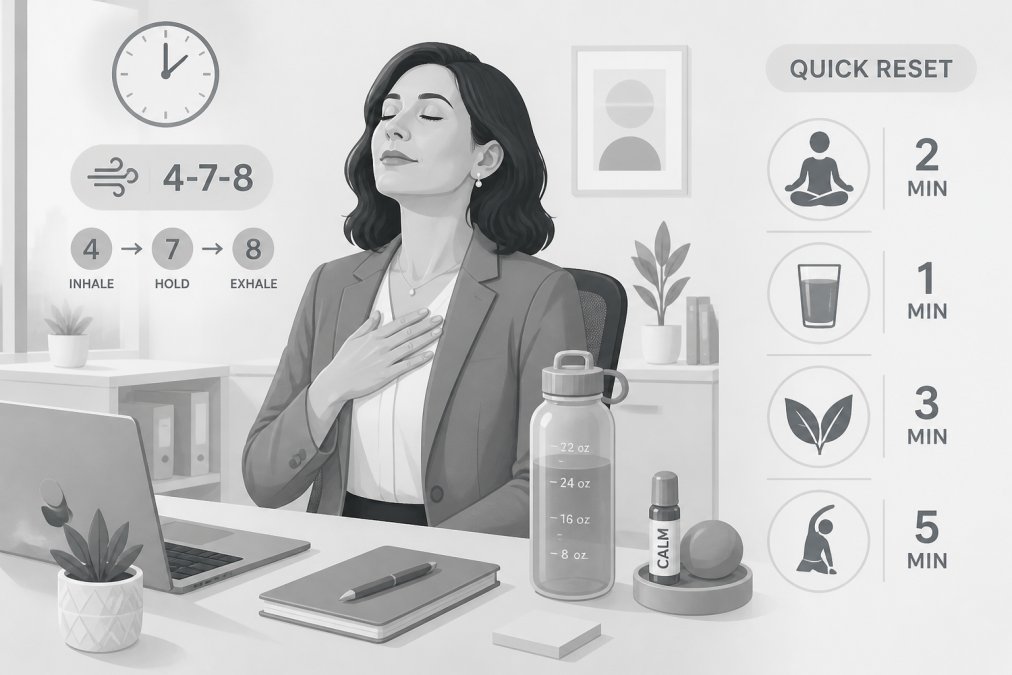
Protecting Cognitive Function and Executive Presence
Executive presence depends on cognitive clarity, emotional stability, and confidence. Menopause symptoms can undermine all three if left unaddressed. Brain fog makes you second-guess your judgment. Mood instability creates emotional reactions you’d normally control. Hot flashes trigger visible discomfort that erodes your composed, in-control image.
Protecting cognitive function means treating menopause symptoms with the same priority you’d give to any condition affecting your work performance. A leader managing untreated menopause symptoms is operating at reduced capacity.
Stress management becomes more critical during menopause because hormonal fluctuations amplify the nervous system’s stress response. Consistent stress management practices stabilize your mood and improve your ability to stay composed under pressure.
The real difference between professionals who thrive through menopause and those who struggle is often not symptom severity, it’s whether they’re treating symptoms proactively or ignoring them.
Menopause Workplace Accommodations and Your Rights
Many professionals don’t realize they have legal protections and workplace accommodation rights related to menopause. Understanding these rights ensures you can manage your health without jeopardizing your career.
Communicating with Your Employer
Disclosure about menopause is entirely your choice. If you choose to disclose, frame the conversation around what you need to perform at your best, not just what you’re experiencing. Instead of "I’m having hot flashes and brain fog," try "I’m managing some health changes that may temporarily affect my energy levels. Here’s how I’m staying on top of my work and what would help me perform optimally."
Document any accommodations you request in writing. This creates a clear record and ensures alignment between you, your manager, and HR. Common accommodations include flexible scheduling, remote work options, access to a private space during the workday, or adjusted meeting schedules.
Know your legal protections. Menopause-related discrimination is unlawful under employment law. Discrimination based on menopause symptoms or your use of medical treatment for menopause may constitute sex discrimination. Retaliation for requesting accommodations or disclosing health information is also legally protected against.
Many professionals hesitate to request accommodations out of fear of career consequences. The reality is that requesting reasonable accommodations is a legal right, and retaliation for doing so is illegal.
Flexible Working Arrangements That Support Your Health
Flexible working arrangements, whether remote work, flexible hours, compressed schedules, or modified meeting loads, directly support menopause symptom management and professional performance. Remote work eliminates commute stress, allows you to manage your environment, and reduces the performance anxiety of managing visible symptoms in an office setting.
Flexible hours allow you to schedule your most cognitively demanding work during peak mental clarity hours. Many professionals find their brain fog is worst in the morning or late afternoon. Flexible scheduling lets you protect your peak hours for high-stakes work.
The business case is straightforward: a professional with the flexibility to manage her health performs better than one struggling to hide symptoms and manage an inflexible schedule simultaneously.
Building Your Personalized Menopause Care Plan
Effective menopause care for busy professionals is personalized, not generic. Your plan should account for your specific symptoms, health history, professional demands, and preferences.
Working with a Healthcare Provider
The foundation of a personalized menopause care plan is a detailed conversation with a qualified healthcare provider, ideally someone with specialized training in menopause medicine. This conversation should cover your symptom pattern, health history, professional demands, and treatment goals.
A comprehensive assessment includes lab work that measures hormone levels and other markers relevant to your symptoms. This lab-based approach moves beyond symptom checklists to understanding your individual hormonal archetype. GAYA Wellness uses this framework to create treatment plans tailored to your unique hormonal profile and life circumstances.
Your plan should address not just symptom relief but also long-term health outcomes. Menopause is a transition to a new hormonal reality that lasts decades. Regular reassessment is essential, as your symptoms may shift and your treatment may need adjustment.

Stress Management and Sleep Hygiene for Busy Schedules
Stress and sleep are interconnected, and both are critical to menopause symptom management. High stress amplifies hot flashes, mood changes, and brain fog. Poor sleep makes stress harder to manage and symptoms more severe.
Stress management for busy professionals doesn’t require hours of meditation. It requires consistent, small practices: ten minutes of breathing work before your most demanding meetings, a brief walk between calls, or journaling before bed. These practices stabilize your nervous system and improve your ability to stay composed under pressure.
Sleep hygiene means protecting your sleep environment and sleep time with the same priority you give to important meetings. This means a cool, dark bedroom, consistent sleep timing, and limiting screen time before bed. For many professionals, addressing sleep disruption through targeted treatment is the single highest-impact change they can make.
Why Career Progression Doesn’t Stop During Menopause
A pervasive but incorrect assumption is that menopause marks the beginning of professional decline. The reality is that many women’s most significant career achievements happen during or after menopause. The difference is whether menopause symptoms are managed strategically or ignored.
Menopause is a transition, not a destination. With proper care, you emerge on the other side with the same professional capabilities you had before, plus the experience, judgment, and credibility that decades of work have built. Career progression during menopause requires the same strategic thinking you’d apply to any major health transition: identify what needs to change, get expert support, implement the changes, and monitor the results.
Your professional value doesn’t decline at menopause. Your energy, focus, and executive presence do decline if menopause symptoms go unaddressed. The solution isn’t accepting reduced performance, it’s treating menopause as a health priority that directly supports your career.
Menopause care for busy professionals is not a luxury or a distraction from your career, it’s an investment in sustained high performance during a critical professional period. When you address menopause symptoms through evidence-based treatment, workplace accommodations, and strategic self-care, you protect the cognitive function and executive presence that define your professional identity. GAYA Wellness specializes in personalized menopause care designed for high-achieving women, using lab-based assessment and individualized treatment planning to create a clear path forward. Rather than managing menopause in isolation, you work with a board-certified OB/GYN who understands both the medical science and the professional demands you’re navigating. Book a consultation with GAYA Wellness to develop a personalized menopause care plan tailored to your unique hormonal profile and career goals.
Frequently Asked Questions
How can I manage menopause symptoms while working a demanding job?
Start with a personalized menopause care plan developed with a healthcare provider who understands your work demands. Evidence-based options include hormone replacement therapy, lifestyle modifications like stress-relieving activities and improved sleep hygiene, and workplace accommodations such as flexible scheduling or temperature control. Many busy professionals find that telehealth consultations make it easier to access specialist care without disrupting their workday. Track your symptoms to identify patterns and adjust your approach based on what works for your schedule.
What are the best virtual menopause treatment platforms for professionals?
Virtual menopause treatment platforms offer convenience for busy schedules, allowing you to consult with healthcare providers from anywhere. When evaluating options, look for board-certified OB/GYN providers, personalized treatment plans based on lab work and your specific symptoms, and patient-centered care that listens to your concerns. The best platform for you depends on whether you want a full-service concierge model with ongoing support or a more transactional telehealth consultation. Ask about their approach to hormone replacement therapy, non-pharmacological treatments, and whether they offer long-term health outcome tracking.
How do I talk to my employer about menopause accommodations?
Start by documenting your specific needs: Do you need temperature control, flexible hours for medical appointments, or periodic breaks for stress-relieving activities? Frame the conversation around productivity and performance, not as a health complaint. You might say, 'I'm managing a health transition and would benefit from flexible scheduling to maintain my performance.' Know your rights: employers are required to provide reasonable accommodations for medical conditions under the ADA if you have a documented diagnosis. If you're uncomfortable disclosing details, focus on the accommodation itself rather than the underlying cause.
Can menopause affect my career progression or leadership effectiveness?
Untreated menopause symptoms like brain fog and sleep disruption can impact executive presence and cognitive function, but this is manageable with proper care. Many high-achieving women find that addressing their menopause symptoms actually strengthens their leadership by improving focus, energy, and confidence. A personalized treatment plan, whether through hormone replacement therapy, lifestyle medicine, or mind-body interventions, can help you maintain the mental clarity and stamina your role demands. The key is treating this as a health optimization issue, not a career limitation.
This article was written using GrandRanker