
How to Fix Slow Metabolism After 40: A Real Guide
Learn how to fix a slow metabolism after 40 with strength training, nutrition, and sleep strategies that actually work for women in midlife.

Last Updated: September 21, 2026
The standard starting dose of tirzepatide is 2.5 mg administered as a subcutaneous injection once weekly. This dose represents the universally recognized entry point for treatment, whether you’re using tirzepatide for weight management (Zepbound) or type 2 diabetes (Mounjaro). According to InCareNow’s 2026 dosing guide, this conservative starting approach balances therapeutic benefit with minimal side effects during your initial treatment phase.
Why start so low? The body needs time to adjust to the medication’s effects on appetite suppression, glucose metabolism, and insulin secretion. Starting at 2.5 mg allows your system to adapt gradually. The Cardiology Advisor’s real-world analysis found that 95.6% of patients initiated tirzepatide at doses below 5 mg, confirming that low starting doses are standard clinical practice.
Your prescriber will monitor your response and adjust based on your individual tolerance and goals. Your prescriber will monitor your response and adjust based on your individual tolerance and goals. This isn’t a one-size-fits-all medication, it’s a personalized journey that begins conservatively and scales to your needs.
The tirzepatide titration schedule follows a structured progression designed to minimize side effects while reaching your therapeutic dose. This isn’t random, it’s based on clinical evidence showing that gradual dose escalation produces better long-term outcomes than rapid increases.
Your first month on tirzepatide keeps you at 2.5 mg weekly. This four-week window is critical. Your body is learning how the medication affects your appetite, energy, and digestion. Many people experience mild nausea or changes in appetite during this phase, these are normal adjustment responses, not reasons to stop.
According to MedCentral’s 2026 treatment guide, maintaining the 2.5 mg dose for the full four-week period allows adequate time for your gastrointestinal system to acclimate. Rushing past this phase increases the likelihood of severe side effects that might otherwise have been manageable.
During weeks 1-4, keep a simple log. Note your energy levels, appetite changes, and any side effects. This information helps your prescriber make informed decisions about your next dose increase. You’re not just taking medication, you’re gathering data about your body’s response.
In week 5, your dose increases to 5 mg weekly if you’ve tolerated the 2.5 mg dose reasonably well. This represents a doubling of your initial dose, which is why the four-week foundation matters. Your body has already adapted to tirzepatide itself; now it’s adapting to a higher concentration.
The standard progression continues in 2.5 mg increments every four weeks: 5 mg → 7.5 mg → 10 mg → 12.5 mg → 15 mg (the maximum). However, this is a guideline, not a mandate. Research from MDPI’s medication course analysis tracking 739 real-world medication courses found that 77.6% of patients reached the 15 mg maintenance dose, but the timeline varied significantly. Some people stayed at 7.5 mg or 10 mg because that dose delivered their desired results without additional side effects.
Your prescriber may slow or pause escalation if you’re experiencing significant side effects. This isn’t failure, it’s optimization.
Tirzepatide arrives as a prefilled pen injector. The injection itself takes 30 seconds. Here’s how to do it correctly.
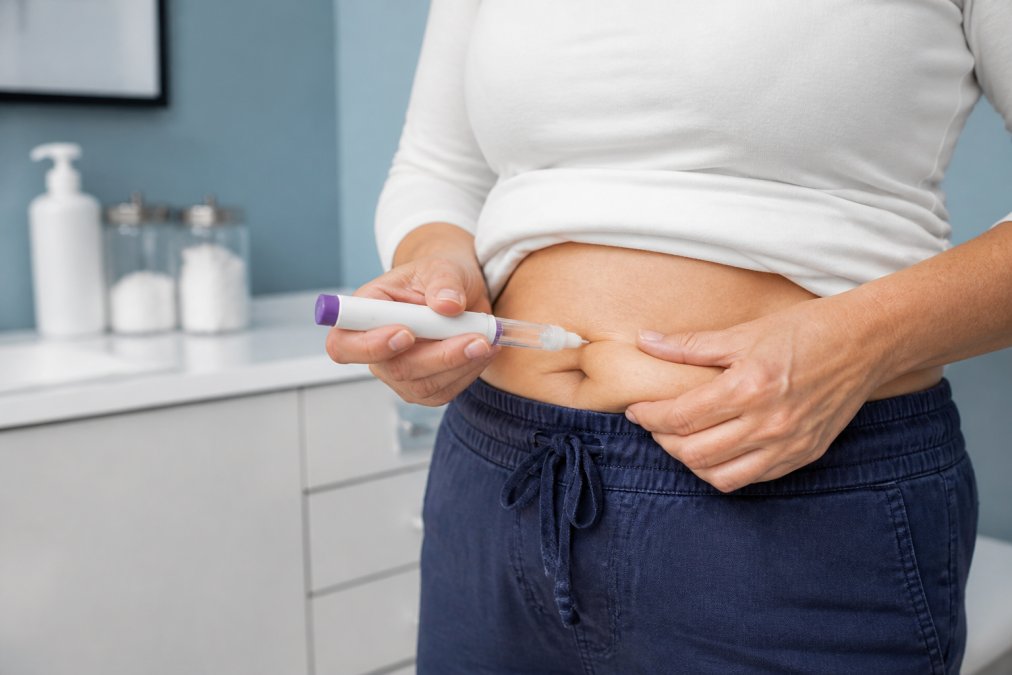
Before your first injection:
The injection process:
After injection:
Side effects are temporary. They’re your body adapting to a powerful medication, not a sign that tirzepatide is wrong for you. Understanding what’s normal and what requires intervention makes the difference between stopping prematurely and pushing through to relief. Maintaining consistency in your preparation is equally vital, as improper peptide reconstitution practices can introduce unnecessary variables that complicate your body’s adjustment to the initial dose.
Nausea is the most common side effect, affecting many patients during dose escalation. It typically peaks in days 2-4 after an injection and improves by day 6-7. It’s not constant, it comes and goes.
What helps:
Most people experience nothing at the injection site. Some develop mild redness, swelling, or itching that resolves within a few hours. This is a normal inflammatory response.
If injection site reactions occur:
Women experiencing perimenopause and menopause face unique metabolic challenges. Declining estrogen slows metabolism, increases insulin resistance, and shifts fat storage toward the abdomen. Tirzepatide addresses the metabolic side of this equation by improving insulin secretion and appetite control.
The maximum recommended dose of tirzepatide is 15 mg weekly. This is the ceiling for both weight management and diabetes treatment. Doses above 15 mg have not been studied in clinical trials and are not approved.
If you miss your weekly injection:
If you realize you missed your dose within 2-3 days, take it as soon as you remember. If more than 3 days have passed, skip that dose and resume your regular schedule the following week. Never double-dose to make up for a missed injection.
If you experience intolerance:
If intolerance occurs, contact your prescriber before your next injection. Options include:
Starting a new medication is as much psychological as it is physical. Preparing mentally and logistically removes barriers to consistency.
Before your first injection, acknowledge what you’re doing. You’re taking control of your health. You’re choosing a medical intervention because diet and exercise alone haven’t solved your weight or metabolic challenges. This is strength, not weakness.
Tirzepatide requires refrigeration. This matters if you travel. Here’s how to manage it:
At home:
When traveling:
The standard starting dose of tirzepatide is 2.5 mg administered subcutaneously once weekly. This low initial dose allows your body to adjust to the medication while minimizing side effects. Real-world data shows 95.6% of patients begin at or below 5 mg, with the dose gradually increasing over weeks under medical supervision. Your prescriber will adjust the schedule based on your tolerance and response.
You typically remain on the 2.5 mg starting dose for 4 weeks before titration begins. During this period, your body acclimates to the medication’s effects on appetite suppression and glucose metabolism. After week 4, your prescriber increases the dose by 2.5 mg increments weekly, moving toward your therapeutic dose. Real-world data shows dose escalation is often slower than clinical trial schedules, with many patients staying on lower doses longer to manage side effects effectively.
The starting dose remains 2.5 mg regardless of whether you’re using tirzepatide for type 2 diabetes or menopause-related weight gain. However, women experiencing perimenopause or menopause may have unique considerations. Hormonal changes can affect how your body responds to medication, and your prescriber may recommend a more conservative titration pace. Personalized assessment of your hormonal archetype and metabolic status helps determine the optimal dosing timeline for your situation.
Rapid dose escalation increases the risk of adverse events, particularly gastrointestinal side effects like nausea, vomiting, and diarrhea. Real-world clinical practice shows slower titration than initial clinical trials, reflecting the importance of patient tolerance. If you experience severe side effects, your prescriber may pause escalation or reduce your dose temporarily. Medical supervision ensures dose adjustments match your body’s tolerance while maintaining therapeutic benefit for weight management or glycemic control.
Learn how to fix a slow metabolism after 40 with strength training, nutrition, and sleep strategies that actually work for women in midlife.

Compare top menopause clinics offering hormone testing. Learn what tests reveal, how to choose a provider, and what to expect at your first visit.

Discover why traditional menopause care falls short for millions of women and how to advocate for better, personalized treatment.

Concierge virtual women’s health coaching combines personalized care, direct provider access, and health coaching. Learn how it works and what to expect.

Why integrative medicine is effective for menopause fatigue. Explore evidence-based treatments, sleep fixes, and a step-by-step plan for lasting energy.

Learn when to see an endocrinologist for hormones. Recognize key symptoms, understand referral options, and prepare for your first appointment.

Learn the standard starting dose of tirzepatide, titration schedule, and what to expect. Expert guidance for weight loss and diabetes management.
Learn how to fix a slow metabolism after 40 with strength training, nutrition, and sleep strategies that actually work for women in midlife.
Compare top menopause clinics offering hormone testing. Learn what tests reveal, how to choose a provider, and what to expect at your first visit.
Discover why traditional menopause care falls short for millions of women and how to advocate for better, personalized treatment.
Concierge virtual women’s health coaching combines personalized care, direct provider access, and health coaching. Learn how it works and what to expect.
Why integrative medicine is effective for menopause fatigue. Explore evidence-based treatments, sleep fixes, and a step-by-step plan for lasting energy.
Learn when to see an endocrinologist for hormones. Recognize key symptoms, understand referral options, and prepare for your first appointment.

Learn the standard starting dose of tirzepatide, titration schedule, and what to expect. Expert guidance for weight loss and diabetes management.
Research shows that combining HRT with GLP-1 therapy produces better weight loss outcomes for women in perimenopause and menopause. Our Hormone Concierge program addresses the hormonal root cause — and pairs perfectly with Weight Loss Concierge.